
 Marco
Marco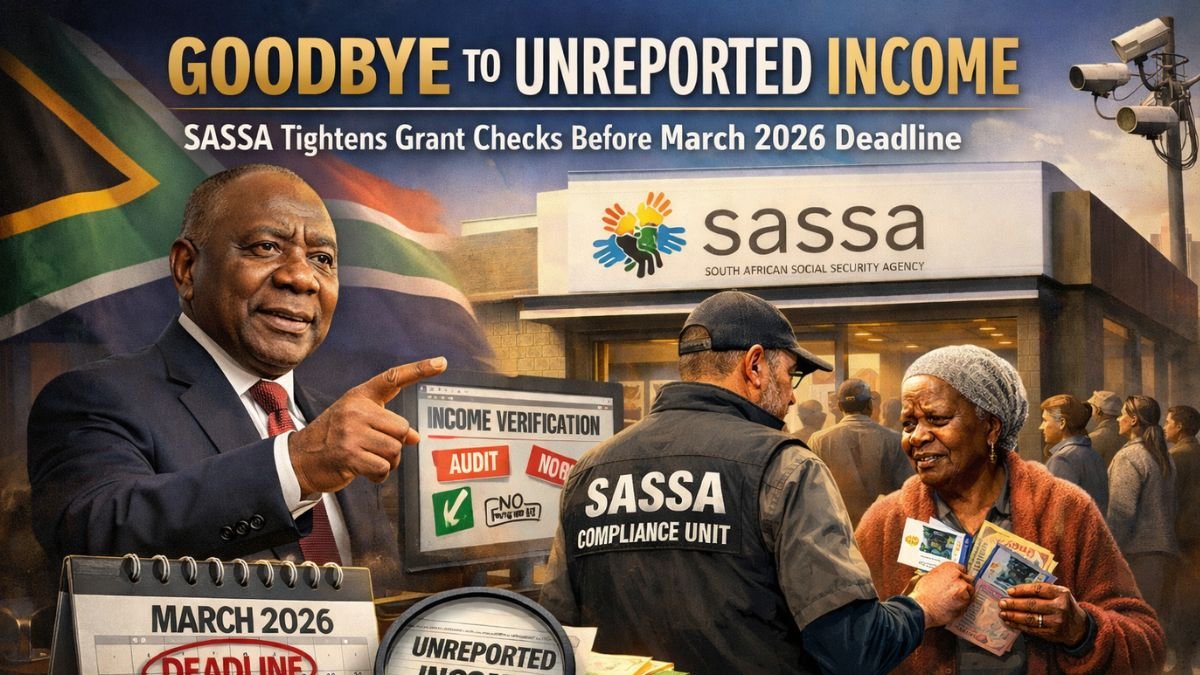
South Africa’s social support system is undergoing important changes as the government works to improve transparency and fairness in grant distribution.
The South African Social Security Agency (SASSA) has launched a stricter verification campaign ahead of the March 2026 compliance deadline.
The goal of this initiative is to ensure that social grants reach the people who genuinely need financial assistance while preventing misuse of public funds.
Beneficiaries are now required to update their financial records, report any changes in income, and confirm their personal information.
For millions of South Africans who rely on grants such as the Old Age Grant, Disability Grant, Child Support Grant, and Social Relief of Distress (SRD) grant, understanding the new reporting rules is essential.
Failing to comply could result in payment delays, temporary suspensions, or even repayment requests.
Why SASSA Is Increasing Grant Verification
SASSA distributes financial assistance to millions of citizens every month. However, officials have expressed concerns about unreported income, inaccurate information, and fraudulent claims affecting the integrity of the system.
To address these issues, the agency has strengthened its verification process by working closely with banks and other government departments.
Improved data-sharing technology allows officials to compare beneficiaries’ financial records with banking information and other official databases.
The review process includes:
- Checking bank account activity
- Comparing income records with grant eligibility
- Reviewing grant applications and beneficiary information
- Conducting random compliance checks
This campaign is designed to protect public funds and ensure that grants are distributed fairly and responsibly.
Focus on Unreported Income
One of the key areas SASSA is targeting is unreported income. Beneficiaries are legally required to inform the agency if their financial situation changes. Even small amounts of additional income, such as part-time earnings or private financial assistance, must be reported.
If SASSA detects discrepancies between a beneficiary’s reported income and banking records, the case may be reviewed.
Beneficiaries who receive notices from SASSA may be asked to:
- Visit a local SASSA office
- Upload documents through the official online portal
- Provide updated financial statements
Officials emphasize that the verification process is not intended to punish beneficiaries but to ensure that the system remains fair and sustainable for everyone.
New Reporting Requirements Before March 2026
All beneficiaries are encouraged to update their records before the March 2026 deadline. This includes reporting any changes in employment, income, or living circumstances.
SASSA may request the following documents:
- Updated bank account details
- Proof of identity
- Proof of residence
- Financial statements or income documentation
- Regular updates on personal circumstances
If a beneficiary begins working part-time or receives additional financial support, they must notify SASSA through the official system.
In many cases, reporting these changes does not automatically lead to grant cancellation. Instead, the agency may conduct a reassessment to determine whether the individual still qualifies for assistance.
Possible Penalties for Non-Compliance
If unreported income is discovered during the review process, SASSA may take further action depending on the circumstances.
Possible consequences include:
- Issuing a compliance notice
- Temporarily suspending grant payments
- Requesting repayment of incorrectly received funds
- Opening a fraud investigation in serious cases
Officials stress that penalties are typically applied only when individuals intentionally provide false information. Beneficiaries who quickly correct errors and cooperate with the agency usually face fewer complications.
Understanding the March 2026 Deadline
The March 2026 deadline is not intended to remove support from those who genuinely need it. Instead, it represents an effort to strengthen the integrity of the welfare system.
By encouraging beneficiaries to update their information early, SASSA hopes to avoid disruptions in payments and ensure that the system continues to function effectively.
The review also serves as a reminder that social grants are a shared national responsibility funded by public resources. When beneficiaries cooperate with verification procedures, the system remains stable and capable of helping vulnerable communities.
Key Requirements for Beneficiaries
| Requirement | Action Needed | Who Must Do It | Possible Result |
|---|---|---|---|
| Income Change | Report new earnings | All beneficiaries | Reassessment of grant |
| Bank Account Update | Submit updated banking details | Payment recipients | Continuous payments |
| Identity Verification | Provide identification documents | Selected applicants | Avoid suspension |
| Unreported Income | Respond to official notice | Flagged cases | Possible repayment |
| Annual Review | Confirm eligibility | Long-term recipients | Grant continuation |
Conclusion
SASSA’s stricter verification campaign ahead of the March 2026 deadline marks a significant step toward improving the fairness and transparency of South Africa’s social grant system.
By focusing on accurate reporting and updated financial information, the agency aims to ensure that government assistance reaches those who truly need it.
For beneficiaries, the best way to avoid disruptions is to update their information promptly, respond to verification requests, and remain honest about income changes.
Cooperation between citizens and SASSA will help maintain a reliable social support system for the future.
FAQs
What is the March 2026 SASSA deadline?
It is the deadline for beneficiaries to update their financial and personal information as part of SASSA’s new verification campaign.
What happens if income is not reported to SASSA?
Unreported income may lead to grant reviews, payment suspensions, or repayment requests depending on the situation.
Will reporting new income automatically cancel a grant?
Not necessarily. In many cases, SASSA will conduct a reassessment to determine eligibility rather than immediately cancelling the grant.